

Is Perplexity AI Actually Better Than Google? Everything You Need to Know Before Switching
Perplexity AI has become one of the most debated tools in the search and research landscape, and for good reason. It does not simply retrieve links the way a traditional search engine does. Instead, it synthesizes answers from real-time web sources, citing each claim directly so users can verify what they are reading. For anyone tired of sifting through ad-filled results pages, Perplexity AI search represents a fundamentally different way to find information.
The platform positions itself at the intersection of a Perplexity AI search engine and a large-language-model assistant, combining real-time web crawling with advanced reasoning models including Sonar, GPT-5.5, and Claude 4.7. Whether you are a developer using the Perplexity coding assistant, a researcher managing complex documents, or an analyst monitoring the Perplexity AI stock market conversation, the platform offers something meaningfully different from Google.
This guide covers the full picture: Perplexity Pro subscription value, source accuracy standards, real-world search benchmarks, competitive positioning, and coding workflow integration. Every section is built for practitioners who need depth, not marketing copy. For context on how this platform fits within the discovery layer behind modern AI innovation, this analysis provides the technical grounding to make an informed decision.
Solving Research Problems with the Perplexity Pro Subscription
| Feature | Free Version | Perplexity Pro Recommended |
|---|---|---|
| Daily AI-powered searches | Limited (approx. 5 Pro searches/day) | Significantly higher daily quota |
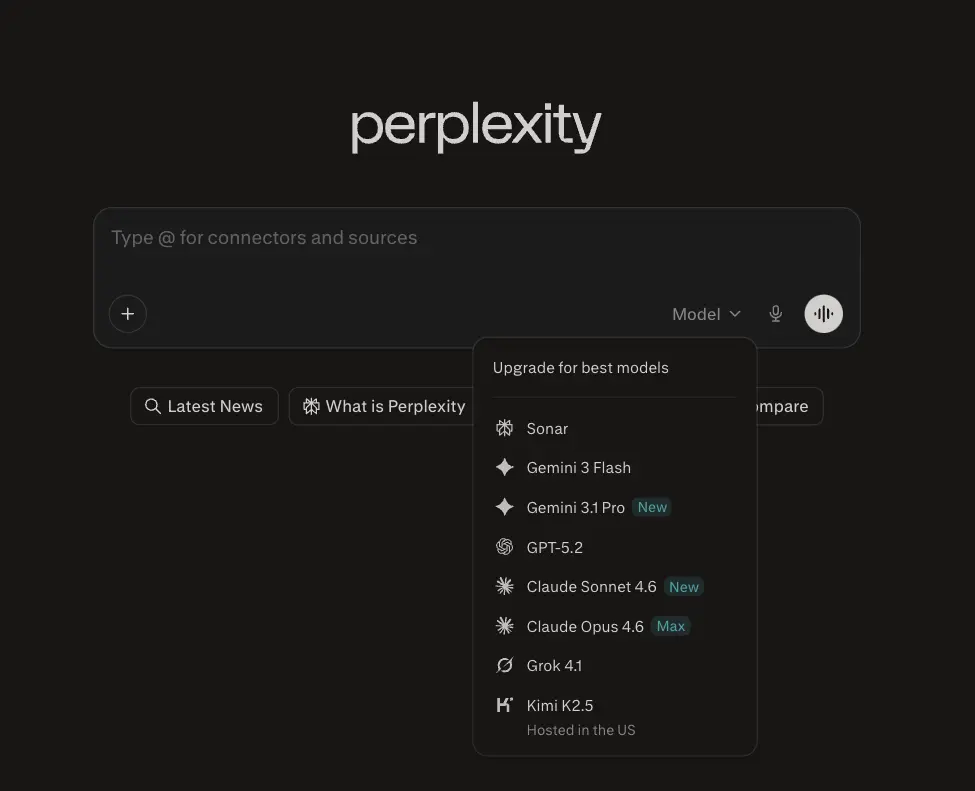
| Model access | Sonar (default only) | GPT-5.5, Claude 4.7, Sonar High-Performance, Gemini |
| File upload and analysis | Not available | PDF, spreadsheet, and code file uploads supported |
| Processing priority | Standard queue | Priority inference processing |
| Perplexity Pages access | Read-only | Create and publish shareable research reports |
| API access eligibility | Not included | Available as an add-on |
| Image generation | Not available | Available via supported model integrations |
| Suitable for | Casual research and browsing | Professional research, complex query handling, enterprise use |
For most casual users, the free version of Perplexity AI is sufficient for light research and quick factual lookups. But the Perplexity Pro subscription is where the platform’s real depth becomes accessible. The ability to switch between reasoning models mid-session, upload technical documents for cross-referencing, and run complex query handling across multi-step research projects transforms Perplexity from a search tool into a full research environment.
The file analysis capability is particularly relevant for teams working in document-heavy environments. Pro users can upload PDFs, spreadsheets, and code files, then interrogate them directly using natural language. This makes information synthesis across large technical datasets a practical workflow rather than a manual effort. For teams that rely on how documentation becomes a living system with AI, this capability integrates naturally into existing content and research pipelines.
Strategic Applications: What is Perplexity Pro Used For in Professional Environments?
In professional environments, the Perplexity Pro subscription serves a range of high-value use cases that go well beyond standard search behavior. Legal and compliance teams use it for rapidly synthesizing regulatory documents and cross-referencing case law across jurisdictions. Financial analysts use it to aggregate earnings call data, market reports, and economic indicators in a single session without tab-switching. Academic researchers use it for literature mapping, connecting related papers and identifying gaps in existing knowledge bases.
Project planning workflows benefit from Pro’s ability to maintain context across long, multi-turn research sessions. Unlike standard search, which resets with each query, Perplexity Pro maintains session memory so that each follow-up question builds on the previous response. This creates a conversation arc that mirrors how experienced researchers think: iteratively, with each answer generating the next question.
The platform is also gaining traction in enterprise content teams for information synthesis tasks. Writers and strategists use it to rapidly synthesize competitive intelligence, distilling information from multiple live sources into structured summaries. The Perplexity coding assistant is a separate but increasingly important use case, particularly for engineering teams that want real-time documentation search alongside their coding environment. For teams evaluating these capabilities in the context of the shifting hierarchy of frontier AI systems, Perplexity Pro occupies a distinct position as a research-first platform rather than a general-purpose assistant.
Model Versatility: Switching Between GPT-5.5, Claude 4.7, and Sonar High-Performance Engines
One of the most operationally significant features of the Perplexity Pro subscription is the ability to switch reasoning models within the same interface. Each model brings a distinct reasoning profile. GPT-5.5 is particularly strong for multi-step logical analysis and structured output generation. Claude 4.7 excels in nuanced language tasks, extended document summarization, and situations where tone and precision matter simultaneously. Sonar High-Performance, Perplexity’s proprietary model, is optimized specifically for web-grounded retrieval and is the fastest option for real-time research tasks.
Understanding when to use each model is a skill that professional users develop over time. For rapid market monitoring, Sonar is typically the right choice. For deep-dive technical writing or legal synthesis, Claude 4.7 tends to produce more reliable long-form outputs. For structured data extraction and analytical frameworks, GPT-5.5 provides the most consistent results. This model-switching capability is one area where Perplexity AI outpaces standard search tools and even some dedicated AI assistants. For those exploring the evolving landscape of open-weights language models, Perplexity’s model roster reflects the broader consolidation happening across frontier AI providers.
Advanced File Analysis: How Pro Users Process Large Technical Datasets Internally
The file upload and analysis functionality within the Perplexity Pro subscription enables a class of research tasks that are not achievable through search alone. Users can upload technical PDFs such as white papers, research studies, or product specifications, and then query them using natural language. The platform extracts relevant sections, cross-references them with live web sources, and synthesizes a grounded answer that draws from both the uploaded document and current information.
This is particularly useful for due diligence workflows where analysts need to compare an uploaded financial report against current market data, or for engineering teams who want to query a technical specification while simultaneously pulling in relevant library documentation from the web. The combined retrieval approach is one of the clearest examples of how Perplexity AI differs from both traditional search and standalone LLM assistants.
Analyzing Perplexity Sources Accuracy and User Security Standards
| Dimension | Perplexity AI | Traditional Search Engines | Standard Chatbots (no citations) |
|---|---|---|---|
| Source transparency | Inline citations on every claim | Link list only; no synthesis | No citations; hallucination risk high |
| Real-time data access | Live web crawling per query | Indexed results (some delay) | Knowledge cutoff; no live access |
| User data for training | Opt-out available; not default | Extensive behavioral profiling | Varies by provider; often default-on |
| Advertising influence | Ad-free information flow | Paid placements in results | None (no search layer) |
| Hallucination risk | Low (grounded in cited sources) | N/A (retrieval only) | High (ungrounded generation) |
| Factual grounding | Source-linked synthesis | User must verify manually | Model-internal only |
| GDPR / regional compliance | US-based; GDPR compliance documented | Varies by provider | Varies by provider |
Perplexity sources accuracy is the platform’s most defensible differentiator. Every answer surfaces a numbered citation list, and users can click any source to verify the claim directly. This is structurally different from a chatbot that generates plausible-sounding text without grounding it in retrievable evidence. The citation layer is not cosmetic: it is built into the retrieval architecture, meaning the model is constrained to synthesize from sources it has actually retrieved rather than generating from internal weights alone.
For researchers who depend on factual grounding, this makes a meaningful difference. In comparisons between standard LLM outputs and Perplexity outputs on the same factual queries, Perplexity consistently produces answers where every key claim can be traced back to a verifiable source. This does not eliminate error entirely, but it does make errors visible and correctable rather than invisible and accepted. The broader shift toward modern conversational interfaces and prompt optimization strategies has made citation accountability an increasingly important standard for professional users.
The Verification Engine: How Perplexity Sources Accuracy Prevents Information Hallucination
The technical mechanism behind Perplexity sources accuracy is a real-time retrieval-augmented generation (RAG) pipeline. When a query is submitted, the platform executes a real-time web crawling pass that retrieves a curated set of sources relevant to the query. These sources are then passed to the reasoning model as grounding context, and the model is instructed to synthesize its answer from this retrieved content rather than from its training data alone.
This architecture materially reduces hallucination because the model is operating in a constrained generation mode. It cannot fabricate sources because each source is verified and linked. It cannot misattribute claims because the citation system ties each assertion to the specific document from which it was drawn. For domains where misinformation carries real consequences, such as medical research, legal analysis, or financial planning, this retrieval-grounded approach provides a meaningful safety layer that standard chatbots cannot replicate.
The source transparency layer also creates an implicit verification prompt for the reader. When you can see exactly where each claim came from, you naturally evaluate whether that source is authoritative for the topic at hand. This shifts the epistemic responsibility back to the reader in a healthy way, rather than encouraging blind acceptance of synthesized output. Understanding how Perplexity’s approach compares to broader model architectures is covered in detail in our analysis of advanced technical frameworks for large-scale intelligence.
Privacy and Data Ownership: Is Perplexity AI Safe for Sensitive Research?
The question of is Perplexity AI safe for sensitive research involves two distinct considerations: data handling policy and information security architecture. On the policy side, Perplexity provides users with opt-out controls for conversation data usage. By default, personal conversation content is not used for model training, which is a more conservative position than several competing platforms. Users who handle sensitive professional or client data should review the current privacy policy and, if necessary, consult their organization’s data governance guidelines before using any cloud-based AI platform for confidential work.
On the security architecture side, Perplexity operates over encrypted connections and does not persistently store search content beyond the session by default for non-logged-in users. For Pro users who have accounts, session history is retained for convenience but can be cleared manually. The platform does not currently offer an on-premise deployment option, so organizations with strict data residency requirements should factor this into their evaluation.
For researchers working in sensitive domains, the practical approach is to treat Perplexity as you would any cloud-based tool: avoid inputting personally identifiable information or confidential client data, use the platform for synthesis of publicly available information, and review your organization’s acceptable use policy. Within these parameters, Perplexity AI is safe and provides meaningfully stronger source accountability than alternatives. For teams evaluating how implementing human-centric logic in complex business processes relates to AI safety standards, Perplexity’s citation architecture sets a useful reference point.
Corporate Infrastructure: Where is Perplexity AI Based and Who Leads the Development?
Perplexity AI is based in San Francisco, California, and was founded in 2022 by Aravind Srinivas, Denis Yarats, Johnny Ho, and Andy Konwinski. Srinivas serves as CEO and has been the most public face of the company’s product vision and fundraising narrative. The founding team brings research backgrounds from OpenAI, Google DeepMind, Meta, and UC Berkeley, which explains the platform’s early technical credibility within the AI research community.
The company has grown rapidly since its public launch, attracting investment from notable venture firms and technology figures. It operates as a privately held company, which is directly relevant to discussions about Perplexity AI stock, covered in the competitive analysis section. The engineering and research team is distributed, with significant talent concentrated in the San Francisco Bay Area. The platform infrastructure runs on cloud compute providers, consistent with most modern AI application companies at this stage of development. For context on how Perplexity fits within the broader competitive landscape, exploring the technical foundations of high-performance developer ecosystems provides useful comparative framing.
Real-World Performance: Perplexity vs Google Search for Information Retrieval
| Benchmark Dimension | Perplexity AI Search | Google Search |
|---|---|---|
| Clicks to direct answer | 1 (answer in initial response) | 2 to 5 (requires clicking into results) |
| Time to synthesized answer | Under 10 seconds on most queries | Varies; user reads multiple pages |
| Direct answer rate (factual queries) | Approximately 85%+ on factual queries | Featured snippets; inconsistent |
| Multi-part question handling | Single response covers all parts | Requires separate searches |
| Local search (weather, maps, nearby) | Limited | Strong with real-time local data |
| Ad-free information delivery | No advertising in results | Paid placements in top positions |
| Intent recognition accuracy | Context-aware, semantic understanding | Strong keyword matching; improving on intent |
| Source diversity per query | Curated set of most relevant sources | Broader index coverage |
The core value proposition of the Perplexity AI search engine versus Google Search comes down to a fundamental design difference. Google is built to surface sources and let users read them. Perplexity AI search is built to read the sources on your behalf and present a synthesized answer. For most research-oriented queries, this eliminates the majority of the cognitive work that traditional search requires.
Where Google wins decisively is in local and transactional search. If you need directions, a restaurant near you, a product price, or a business’s phone number, Google’s integrated data layers are unmatched. Perplexity does not have deep integrations with mapping, business listings, or shopping databases. For research-intensive tasks, however, the advantage swings toward Perplexity because of its context-aware responses and ad-free information flow. For those also managing optimizing social media engagement through intelligent automation, Perplexity serves as a strong research feed that can inform content strategy without the noise of ad-sponsored results.
Why the Perplexity AI Search Engine Logic Outperforms Traditional Keyword Matching
Traditional keyword search matches query terms against an indexed document corpus and ranks results by relevance signals including link authority, freshness, and click behavior. This works well when users know how to phrase precise queries, but breaks down when the user’s actual intent is more complex than any single search phrase can express.
The Perplexity AI search engine uses semantic search and intent recognition to understand what the user is actually trying to accomplish rather than just what words they typed. A query like “what happened to X company’s funding round” triggers a retrieval process that understands the user wants current financial news, not a general definition of funding rounds. The system pulls live indexed sources relevant to that intent, synthesizes them, and produces an answer that addresses the underlying question rather than returning a keyword-matched document list.
This semantic search capability is particularly powerful for multi-part queries. When a user asks “compare the revenue model of X and Y companies and explain which has better growth prospects,” a traditional search engine returns results for each company separately and leaves the comparison to the user. Perplexity performs the comparison in the answer itself, pulling from multiple sources and structuring the output around the user’s actual analytical need. Exploring how this compares to the approach taken by newer reasoning models is useful context available in the evaluation of multi-agent orchestration systems and advanced reasoning logic.
Identifying the Strengths and Weaknesses of the Perplexity AI Search Experience
The primary strength of the Perplexity AI search experience is speed to insight. For knowledge-based queries, professional research, and technical documentation lookup, Perplexity consistently outperforms traditional search in terms of time from query to usable answer. The inline citation system means users can verify claims without leaving the interface, and the model-switching capability allows Pro users to select the reasoning engine best suited to the task at hand.
The primary weaknesses are coverage and local integration. Perplexity does not index the full web the way Google does, meaning some niche topics or very recent local events may not be well represented in its retrieval results. The platform also does not support image search, video search, or location-aware queries in the way that a traditional search engine does. Users who rely heavily on Google Images, Google Maps, or Google Shopping will find no equivalent in Perplexity. For those comparing the visual generation capabilities relevant to adjacent AI workflows, the analysis of evaluating high-fidelity visual generation for creative workflows provides useful context on where different platforms specialize.
Future-Proofing Information: Can Perplexity Effectively Replace Your Daily Search Habits?
For knowledge workers whose primary search use cases are research, learning, competitive intelligence, and technical documentation, Perplexity AI search can realistically replace a significant portion of daily Google use. The practical transition involves identifying which queries you currently run in Google and categorizing them: research-oriented queries move to Perplexity with meaningful productivity gains; local, navigational, and transactional queries remain better served by Google.
The platform’s development trajectory suggests continued expansion of its coverage and capabilities. With active investment in model quality, Perplexity Pages for shareable research outputs, and API access for developers, the platform is building toward a broader information ecosystem rather than remaining a specialized search alternative. For organizations considering AI-driven workflow transformation, the relevant question is not whether to use Perplexity instead of Google, but how to integrate both into a workflow where each handles the query type it does best. For broader context on AI text and content generation tooling that complements this kind of research layer, the overview of choosing the right parameter scale for local implementations addresses how model selection shapes output quality across different task types.
Competitive Analysis: Perplexity vs Gemini vs ChatGPT vs Claude Performance
| Criterion | Perplexity AI Search-First | ChatGPT (with Browse) | Claude | Gemini |
|---|---|---|---|---|
| Current event accuracy | Excellent (live RAG) | Good (browse mode) | Limited (knowledge cutoff) | Good (Google index integration) |
| Citation transparency | Inline on every claim | Inconsistent | None by default | Partial |
| Real-time data latency | Sub-10 seconds typical | Moderate (browse overhead) | N/A | Low (native index) |
| Long-form reasoning depth | Good | Excellent (GPT-5.5) | Excellent (Claude 4.7) | Good |
| Source reliability score | High (retrieval-grounded) | Moderate | Low (no live retrieval) | Moderate-High |
| Price-performance (research) | High (Pro tier) | Moderate | Moderate-High | Competitive |
| Model switching in-session | Yes (Pro tier) | Limited | No | No |
The competitive landscape for AI-assisted research has consolidated around a small number of platforms, each with distinct architectural strengths. Perplexity AI occupies a unique position because it is the only major platform that treats web retrieval as a first-class architectural component rather than an add-on. ChatGPT’s Browse mode and Gemini’s Google index integration provide real-time data, but neither matches Perplexity’s citation transparency or the speed of its dedicated retrieval pipeline.
Claude 4.7 is arguably the strongest reasoning model available to Pro users within Perplexity, and using it inside the Perplexity interface gives Claude access to live web retrieval that it does not have in its native environment. This combination of Claude’s reasoning depth with Perplexity’s retrieval architecture is one of the most powerful research configurations currently accessible to professional users. For those tracking the technical evolution of these models, the deep analysis of benchmarking the latest breakthroughs in cognitive processing provides essential comparative context.
Live Information Benchmarking: Why Perplexity Often Leads in Current Event Accuracy
Live information benchmarking consistently shows that Perplexity AI outperforms standalone LLMs on questions about events that occurred within the past few days or weeks. The reason is architectural: Perplexity crawls the live web with each query rather than relying on a static training corpus. This means a query submitted today will pull from sources published today, including news articles, press releases, and regulatory filings that no static model could access.
This real-time data integration is particularly valuable for financial research, policy monitoring, and technology tracking. Analysts who need to know what happened in a particular market yesterday, or what regulatory guidance was issued this morning, get answers grounded in sources published within the relevant time window rather than synthesized from training data that may be months or years old. The news indexing speed is typically faster than even well-resourced human research teams, making it a practical tool for time-sensitive decision-making environments.
Evaluating Perplexity AI Stock Potential and Market Position Among AI Giants
Perplexity AI stock is not currently available on public exchanges. The company operates as a privately held entity and has raised multiple venture funding rounds, attracting capital from prominent technology investors. Any secondary market activity through private equity platforms is subject to significant liquidity constraints and is not accessible to retail investors through standard brokerage accounts.
From a market positioning perspective, Perplexity AI competes in a segment that is simultaneously attractive and challenging: the transition from traditional search to AI-native information retrieval. The platform’s growth in user volume and recurring revenue suggests strong product-market fit, particularly among professional and enterprise segments. Whether the company pursues an IPO path depends on market conditions, competitive dynamics, and its own capital requirements. For those tracking how AI companies are positioning themselves for public market entry, the analysis of the underlying infrastructure of next-gen autonomous systems covers the technical moats that differentiate durable AI businesses from short-term plays.
Ecosystem Versatility: Comparing Perplexity to Integrated Native AI Workspaces
Unlike platform ecosystems such as Microsoft Copilot or Google Workspace AI, Perplexity AI operates as a standalone research tool rather than an embedded productivity layer. This has both advantages and limitations. The advantage is that Perplexity is application-agnostic: it works alongside any workflow, any document editor, and any development environment without requiring ecosystem buy-in. The limitation is that it does not have native integrations with calendar, email, or document management tools that embedded AI assistants provide.
For users who want the benefits of Perplexity’s research capabilities alongside a native document creation environment, the practical approach is browser-based: run Perplexity in one tab and your document editor in another, using Perplexity’s output to inform the content you are creating. The Perplexity API (available to Pro subscribers as an add-on) enables developers to integrate Perplexity’s retrieval capabilities directly into custom applications and tools, which expands its ecosystem reach significantly. The intersection of AI-assisted research and creative production is explored further in the context of advanced technical workflows for professional artistic production.
Improving Workflow Efficiency with the Perplexity Coding Assistant
| Criterion | Perplexity Coding Assistant | GitHub Copilot | ChatGPT Code Interpreter | Claude (Native) |
|---|---|---|---|---|
| Live documentation retrieval | Yes (real-time web) | No (training-based) | Limited (browse mode) | No |
| Error log analysis | Strong (retrieval + reasoning) | Good (in-editor context) | Strong | Excellent |
| Syntax correction accuracy | Good | Excellent (in-editor) | Good | Excellent |
| Library support breadth | Broad (live index) | Good (training corpus) | Good | Good |
| Documentation accuracy (current) | High (pulls live docs) | Variable (training cutoff risk) | Moderate | Variable |
| Multi-language support | Broad (web-indexed) | Strong | Strong | Strong |
| In-editor native integration | Browser-based (no plugin) | Native IDE plugin | Browser-based | Browser-based |
The Perplexity coding assistant occupies a distinct niche in the developer tooling landscape. It is not a replacement for an IDE-native assistant like GitHub Copilot, which has deep integration with the code editor context and provides inline completions. Instead, the Perplexity coding assistant functions as a research-grade documentation and debugging resource that developers access alongside their IDE.
The critical advantage is live documentation accuracy. When a library releases a new version with breaking API changes, a training-based assistant may continue suggesting deprecated methods for weeks or months until a model update incorporates the change. Perplexity, by pulling live documentation directly from package repositories, official documentation sites, and community forums, reflects the current state of a library rather than a training-era snapshot. This makes it particularly valuable for fast-moving ecosystems like JavaScript frameworks, Python data science libraries, and cloud infrastructure tools. For developers building in environments covered by the analysis of exploring the internal architecture of modern code editors, Perplexity fills a documentation research gap that no single IDE can fully address alone.
How Developers Use the Perplexity Coding Assistant for Rapid Debugging
Rapid debugging with the Perplexity coding assistant typically follows a structured workflow. A developer encounters an error, copies the error log or exception trace into Perplexity, and submits it with context about the library version and environment. Perplexity retrieves relevant StackOverflow discussions, GitHub issue threads, and official documentation for the identified error pattern, synthesizes the most applicable fixes, and surfaces the sources so the developer can verify the solution before applying it.
This retrieval-grounded debugging approach addresses one of the most common failure modes of static LLM code assistants: confidently suggesting fixes for errors that were patched in a recent library version, or recommending deprecated APIs that no longer exist. Because Perplexity retrieves from live sources including issue trackers that may have been updated hours ago, it can sometimes surface solutions to very recent bugs that no static model has yet been trained on. For developers working in environments where optimizing development environments for maximum workflow speed is a priority, Perplexity functions as a high-speed documentation research layer that accelerates the debugging cycle.
Automation script development is another strong use case. Developers building scripts for data pipelines, API integrations, or infrastructure automation can use Perplexity to rapidly identify the correct syntax, available parameters, and edge case handling for any tool or API they are working with. The platform surfaces both the official documentation and community-sourced best practices in a single synthesized response, which reduces the context-switching that slows script development.
Integrating Perplexity Results into Professional Coding Environments
The primary integration pattern for the Perplexity coding assistant in professional coding environments is side-by-side browser use. Developers keep Perplexity open in a browser tab adjacent to their IDE and use it as an active reference during coding sessions rather than a passive lookup tool. This workflow is distinct from in-editor assistants, which suggest completions inline, but it provides complementary value: Perplexity handles the “what does this library currently do and how” questions, while the IDE assistant handles “how do I complete this line of code” inline suggestions.
For teams building custom tooling, the Perplexity API enables programmatic integration of retrieval-augmented code assistance into internal developer tools. A team could build an internal chatbot that uses the Perplexity API to answer questions about their own codebase combined with live documentation retrieval, creating a customized research assistant that understands both internal and external technical context. For teams evaluating agent-driven development infrastructure, the architectural patterns described in the rise of agent-driven integrated development environments provide relevant framing for where Perplexity’s API fits into a broader agentic coding stack.
Language support through the Perplexity coding assistant extends to any language with an indexed documentation and community presence on the web. This includes mainstream languages like Python, JavaScript, TypeScript, Java, and Go, as well as more specialized languages like Rust, Elixir, Zig, and domain-specific languages for data processing or infrastructure configuration. Because Perplexity retrieves from the live web rather than a training corpus, even newer languages or niche frameworks with limited training data representation can be effectively researched through the platform. The practical coding environment setup guidance in practical implementation of autonomous coding in rapid development is useful for teams structuring their AI tooling stack around this kind of retrieval-enhanced workflow.
FAQ: Key Questions About Using Perplexity
Is it possible to buy Perplexity AI stock on public exchanges?
Perplexity AI stock is not available on any public exchange. The company is privately held and has raised multiple rounds of venture funding, but has not filed for an initial public offering. Retail investors cannot purchase shares through standard brokerage accounts. Any access to Perplexity AI stock would require participation in a private secondary market, which involves significant restrictions and is typically available only to accredited investors. For those tracking the broader market positioning of AI companies, the analysis of maintaining consistent brand voice in enterprise-level content provides a useful lens for understanding how AI companies differentiate themselves in competitive markets ahead of potential public offerings.
Does the Perplexity Pro subscription allow access to Claude 4.7 and GPT-5.5?
Yes. The Perplexity Pro subscription provides access to a selection of frontier reasoning models including Claude 4.7 and GPT-5.5, alongside Perplexity’s own Sonar High-Performance model and other integrated options. Model availability may vary by region and is subject to periodic updates as Perplexity adds or rotates available models. Users can switch between models within a session, which is one of the Pro tier’s most valuable features for professional research workflows. To access advanced reasoning models, users can manage their model selection directly from the Perplexity interface after upgrading to Pro.
How does the Perplexity AI search engine handle local queries like weather or news?
The Perplexity AI search engine handles current news queries effectively through its real-time retrieval pipeline, surfacing recent articles and synthesizing them with citations. Local weather queries are supported at a general level, but Perplexity does not have deep integrations with real-time meteorological data feeds or location-aware services the way Google does. For highly localized queries (specific neighborhood businesses, precise current temperature, street-level mapping), Google Search remains a better tool. For Perplexity AI search, the strength is in synthesized knowledge rather than structured local data retrieval. For those also managing content around local or regional topics, the resource on performance-driven copywriting tools for scalable digital marketing addresses how AI writing tools complement research platforms like Perplexity in a full content workflow.
What protocols ensure that Perplexity sources accuracy is higher than standard LLMs?
Perplexity sources accuracy is maintained through three architectural mechanisms: retrieval-augmented generation (RAG) that grounds answers in live web sources, inline citation linking that ties each claim to a specific URL, and model instruction tuning that restricts generation to content grounded in retrieved documents. Together these protocols substantially reduce the hallucination risk characteristic of standard LLMs, which generate from internal weights without retrieval grounding. Source transparency also creates a human verification layer: because every claim is linked, readers can audit the quality of the underlying sources independently. For deeper analysis of how RAG architectures compare to native model reasoning, the resource on where design, motion and AI begin to merge illustrates the broader pattern of retrieval-augmented systems across different AI application domains.
Can I use the Perplexity coding assistant for languages like Rust or Go?
Yes. The Perplexity coding assistant supports Rust, Go, and effectively any language with a documented presence on the indexed web. Because Perplexity retrieves from live sources rather than a static training corpus, languages like Rust that have rapidly evolving ecosystems and active community forums are well-supported. Perplexity can pull from the official Rust documentation, the Rust subreddit, crates.io discussions, and GitHub issues simultaneously to answer a query. The same applies to Go, with retrieval from the Go standard library documentation, the Go forum, and community repositories. For teams also exploring agent-driven coding workflows, the analysis of cinematic camera control and advanced inpainting techniques demonstrates the breadth of precision that retrieval-augmented tools can bring to specialized creative and technical domains.
Is Perplexity AI safe to use without a VPN in different regions?
Perplexity AI is safe to use without a VPN in most regions where the platform is accessible. All connections to the platform are encrypted via standard HTTPS, which protects data in transit regardless of whether a VPN is used. The decision to use a VPN with Perplexity AI is more relevant to privacy preferences around IP address visibility than to security of the connection itself. In regions where the platform may have restricted access, a VPN may be required for connectivity, but this is a network access question rather than a security question. Users who handle highly sensitive professional data should review their organization’s VPN policy as a general practice for any cloud-based tool, not specifically because of Perplexity. The broader context of data security standards across AI platforms is addressed in the evaluation of native high-resolution rendering and cinematic audio synthesis within the framework of responsible AI deployment.
How do Perplexity Pages work for creating shareable research reports?
Perplexity Pages is a feature available to Pro users that allows research sessions to be structured and published as formatted, shareable documents. Users can generate a Page from a research topic, and Perplexity will produce a structured report with organized sections, inline citations, and a reading-friendly layout that can be shared via a public URL or kept private. Pages can be edited after generation, allowing users to refine the output before sharing. This feature is particularly useful for researchers who want to share a grounded, cited summary of a topic with colleagues or clients without requiring the recipient to have a Perplexity account. For those integrating Perplexity Pages into a broader content production workflow, understanding how AI documentation tools scale is covered in the framework of scalable documentation for cloud-based development environments.
AiToolLand Research Team Verdict
Perplexity AI represents one of the most technically coherent responses to the limitations of both traditional search and standalone LLM assistants. Its retrieval-augmented architecture solves the hallucination problem in a structurally defensible way, its Perplexity Pro subscription provides genuine access to frontier model capabilities within a research-oriented interface, and its Perplexity coding assistant fills a live documentation gap that no static training-based tool can fully address.
The platform is not a complete replacement for Google Search in all use cases, and it does not match the long-form reasoning depth of Claude 4.7 or GPT-5.5 in their native environments. But for knowledge workers whose primary need is fast, cited, trustworthy information synthesis, Perplexity AI search is the most purpose-built tool currently available. The Perplexity Pro subscription specifically delivers strong value for researchers, analysts, developers, and enterprise teams who run high-volume, high-stakes information tasks daily.
To access advanced reasoning models like Claude 4.7 or GPT-5.5, users can upgrade their account settings via the Perplexity Pro subscription dashboard, which unlocks higher file upload limits and priority processing. The AiToolLand Research Team recommends Perplexity AI as a primary research tool for any professional workflow where source accountability and real-time information accuracy are non-negotiable requirements. Visit the official platform at perplexity.ai to explore current plan options and available model integrations.